He asks again before the last one is back
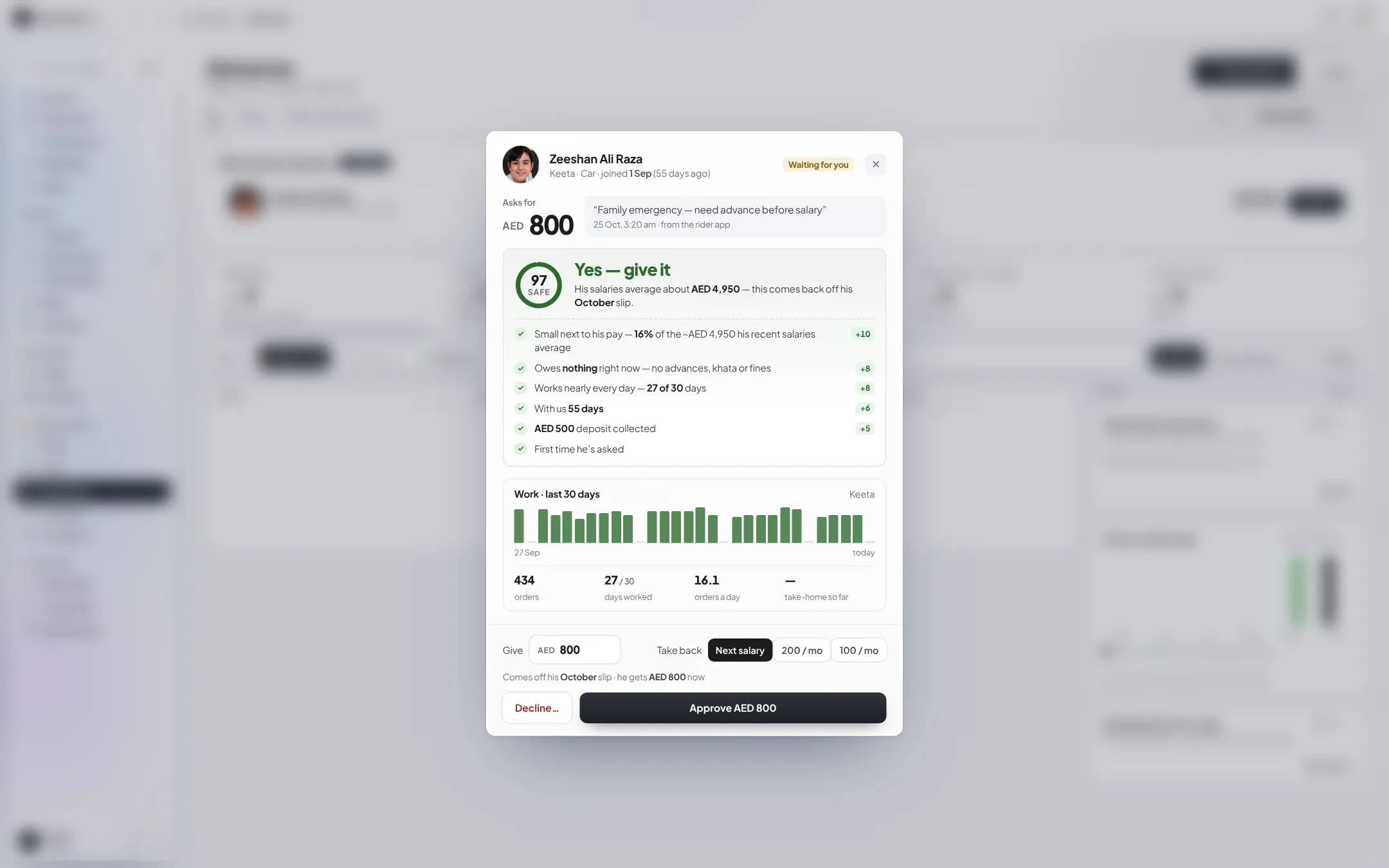
What he still owes shows on the new request, and the safety score counts it.
Riders ask for an advance in their app, and your office sees at a glance whether it is safe to give. Bigger debts, like a visa or a bike repair, sit in his khata. Both come off his slips, and both show what is left.
From the request on his phone to the last dirham back.
He enters the amount and the reason. One request waits at a time, and nobody can ask once his exit has started.
The request comes with a score and its reasons: how it compares with his recent pay, what he already owes in advances, khata and fines, how often he works, how long he has been with you and his deposit.
Change the amount if you need to, then approve or decline. Approving for a rider who is leaving asks you first.
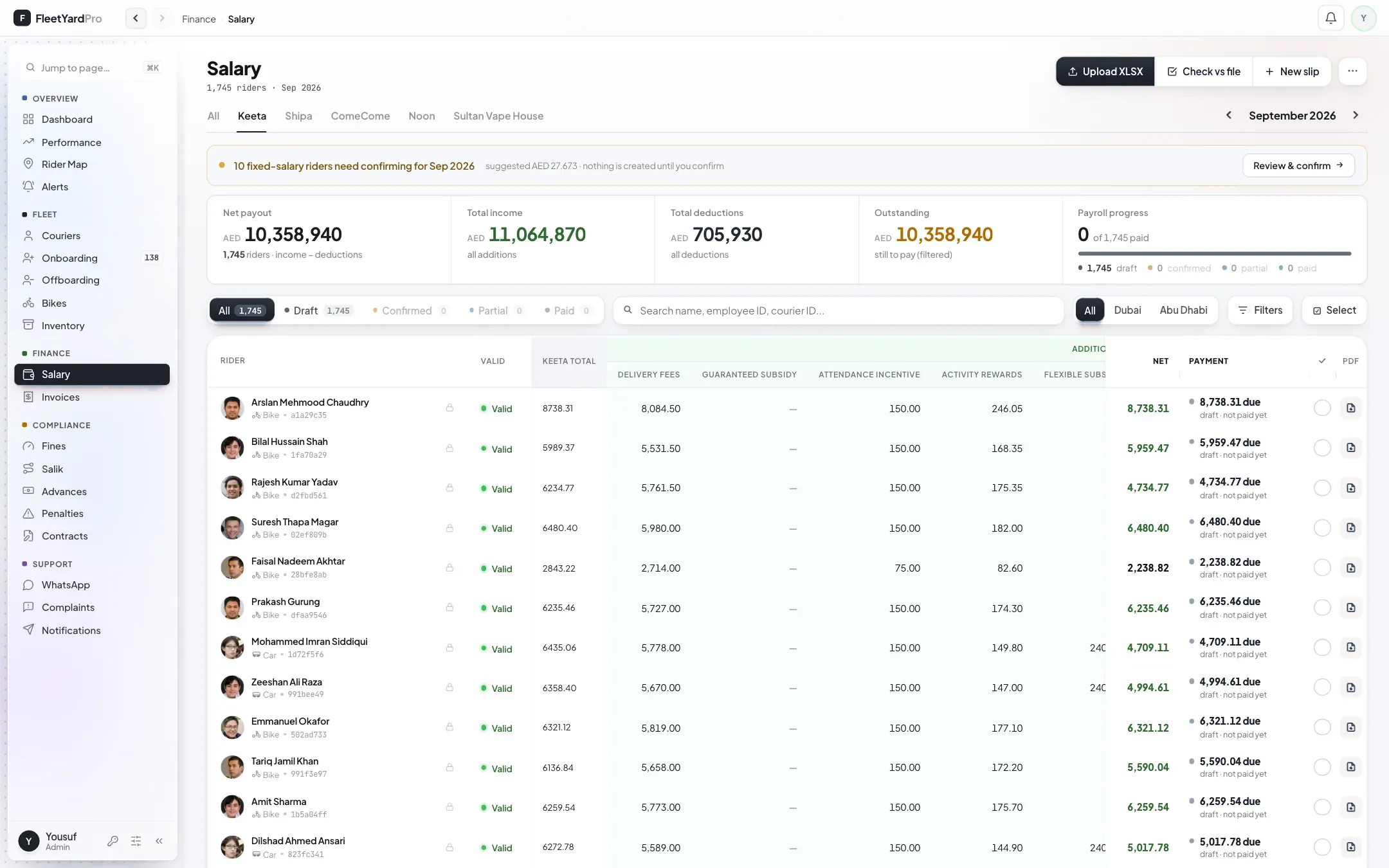
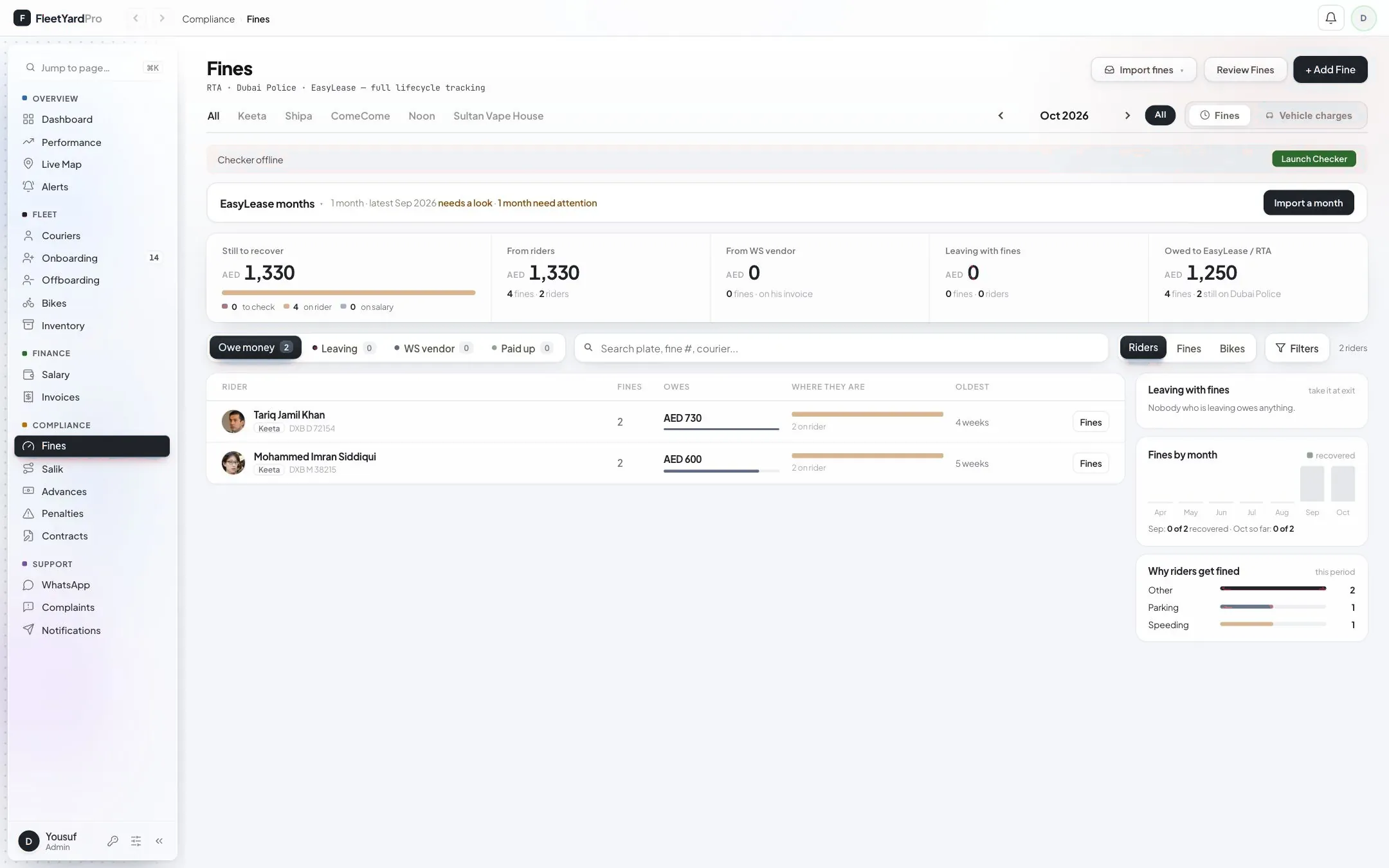
Advances come off after Salik and fines, oldest first. Your office sees each one on the draft slip and can change it before locking. What is not taken stays on the advance.
A visa, a bike repair or a loan sits in his khata. It never comes off by itself: your office ticks how much to take, up to what his pay can cover, and sees what came back, what is left and roughly when it clears.
Where most offices lose an advance, and what the portal does instead.
What he still owes shows on the new request, and the safety score counts it.
He can’t ask once his exit has started, and approving an older request asks you first. His exit can’t close until his last slip has run.
What is not taken stays on the advance and comes off the next slip.
The Advances page lists every advance with nothing taken back in 45 days, and who to chase before they leave.
A khata with nothing taken for 60 days is flagged on his profile, with the next step: open his draft slip, or record cash.
Record the cash on his khata. It shows who received it and what is left after it.
Set up for you, on your own riders.